Downstream
How is water distributed when you irrigate?
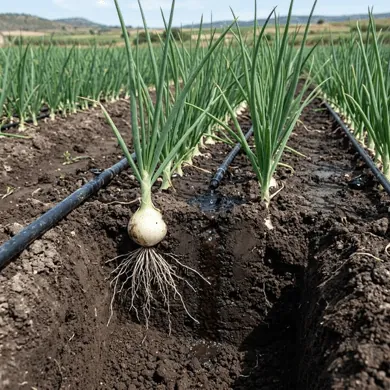
When you irrigate, the water does not simply soak into the soil: it forms a specific zone called the wetted bulb. This is the area from which the root system can draw the available water.
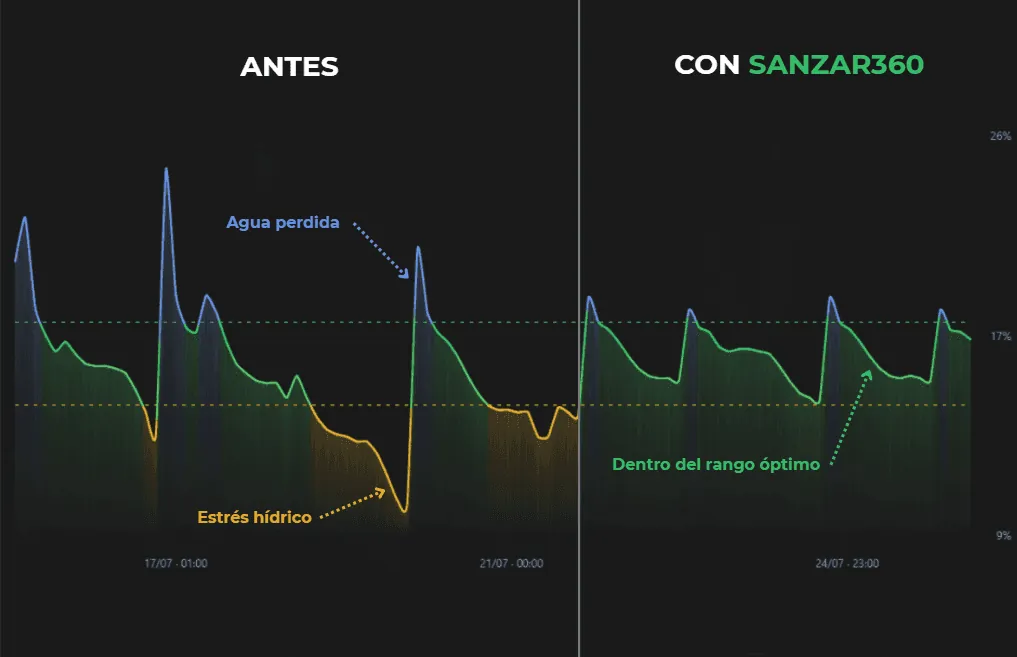
The main drawback is that this bulb is depleted within 24 to 48 hours. If that loss of moisture is not detected in time, the crop can go into stress.
Why does it disappear so quickly?
The wetted bulb is depleted by five main factors acting at the same time:
- Soil type.
- Air temperature.
- Wind exposure.
- Root system depth.
- Solar radiation.
What happens to the plant?
- Stage 1 (12 to 24 hours without water): the leaves begin to droop slightly.
- Stage 2 (24 to 48 hours): growth stops and the stems lose turgor.
- Stage 3 (48 to 72 hours): a critical phase in which wilting is already obvious.
- Stage 4 (more than 72 hours): once this stage is reached, the structural damage to the crop is irreversible.
The main drawback is that the first two stages go unnoticed. Even if no signs of damage can be seen with the naked eye, yield is already being lost during this period.
The solution is simple
It is essential to identify the exact moment when water starts to run short, especially during those first two days when nothing can be seen. Irrigation should be applied before the plant goes through severe physiological stress, not as a reaction once wilting is already obvious.
To do this, you need to understand the characteristics of the soil: how much water it can hold, how long the moisture lasts and the exact point at which it runs out. Anticipating that moment lets you schedule irrigation just before the reserve is used up.
Managing all these factors properly prevents any level of water stress in the crop, which ensures the highest possible yield at harvest.