Downstream
Same water allowance, higher yield: the effect of irrigating at the right time
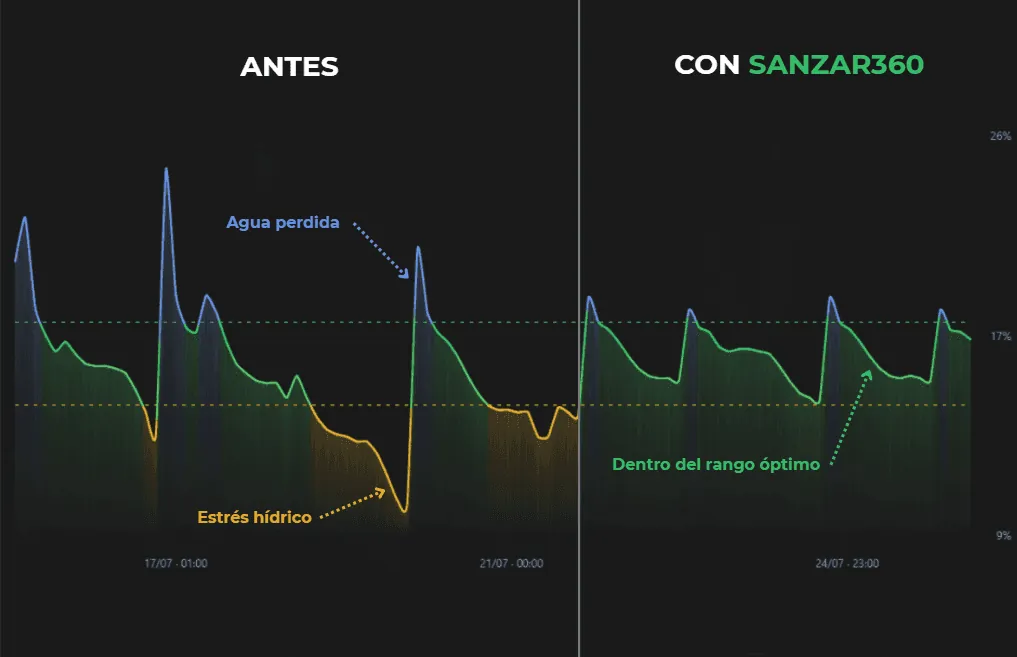
When people think about improving irrigation, they almost always think about saving water. But there is another effect, just as valuable and mentioned less often: with the same amount of water, simply spread better over time, the crop can yield more.
It is not only how much water, but when
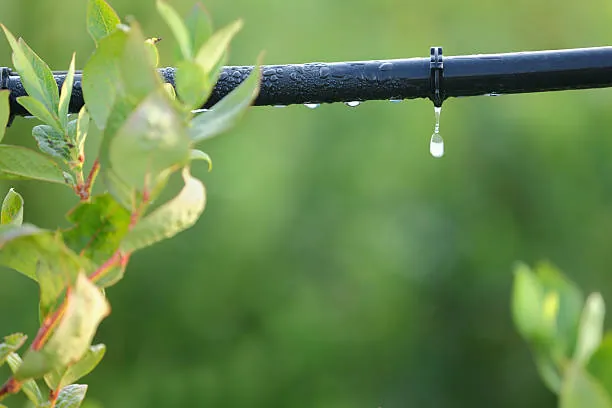
The same volume of water applied in a few large, widely spaced doses is partly wasted: the soil cannot hold all of it, and the excess drains below the root zone. Between irrigations, the plant also spends periods close to water stress. That same volume, split into smaller and more frequent doses, changes the outcome: less loss through drainage, less stress and water available more consistently.
What the studies say
This is not just intuition. A review of studies on precision irrigation (Lakhiar et al., 2024, Agriculture) puts the yield increase associated with these techniques at between 20% and 30%. A reference study (El-Naggar et al., 2020, Agricultural Water Management) measured savings of between 15% and 51% when moving from a fixed schedule to soil moisture sensors, and data gathered by UC ANR show water savings of up to 10-16% in strawberry and almond while maintaining maximum yield. The range varies with crop and soil, but the conclusion is consistent: the gain comes from irrigating at the right moment, not from irrigating more.
How Sanzar360 does it
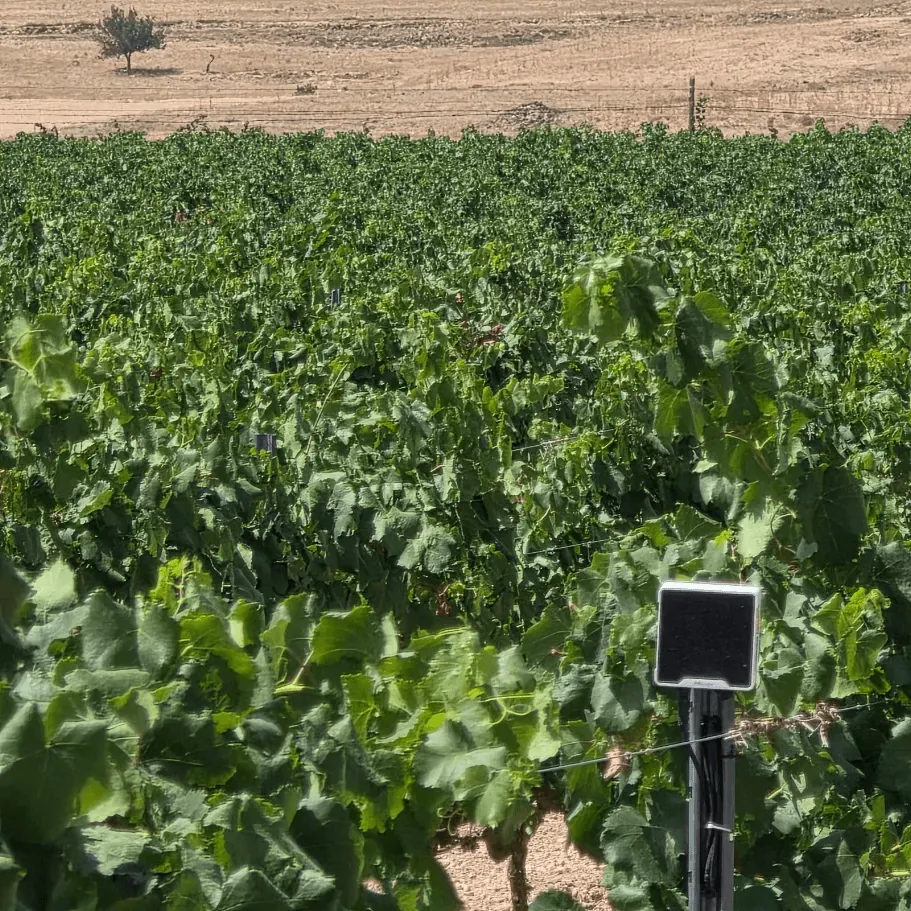
Sanzar360 measures soil moisture in real time with TEROS-10 sensors and automates irrigation with the UC501 controller, adjusting when and how much to irrigate according to what the soil shows, not a fixed schedule. The water allowance does not have to increase for yield to go up: it is enough that water stops being lost when the soil is already saturated and arrives when the plant actually needs it.
There is no need to invest in more water. What you need is to know when to apply the water you already have.
An example: watermelon
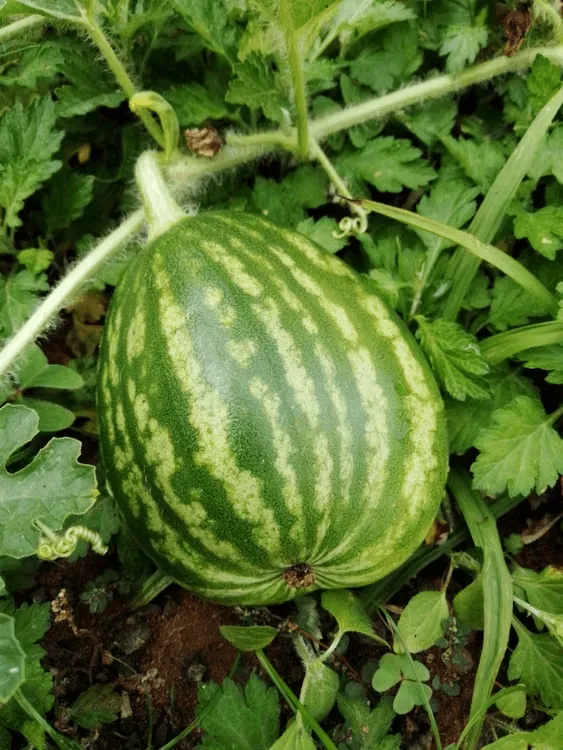
Watermelon shows clearly how much margin is at stake. With well-managed drip irrigation, agronomic research puts typical yield at around 70,000 kg/ha, with cases of up to 90,000-93,000 kg/ha under Mediterranean conditions when irrigation is matched to the crop cycle instead of following a fixed schedule. The difference between one end and the other is not more water: it is giving the same water at the moment the plant can make use of it.
That is exactly what many of our clients ask for when they install Sanzar360: to apply their water allowance only when it is really needed, without increasing the total volume used.
Contact us to find out how Sanzar360 can improve the way irrigation is distributed on your farm, with the same water allowance you already have.
Sources:
- Lakhiar, I.A. et al. (2024). “A Review of Precision Irrigation Water-Saving Technology under Changing Climate for Enhancing Water Use Efficiency, Crop Yield, and Environmental Footprints.” Agriculture, 14(7), 1141. DOI: 10.3390/agriculture14071141.
- El-Naggar, A.G. et al. (2020). “Soil sensing technology improves application of irrigation water.” Agricultural Water Management, 228, 105901. DOI: 10.1016/j.agwat.2019.105901.
- UC Agriculture and Natural Resources (UC ANR). “Soil Moisture Sensors.” Irrigation and Nutrient Management. https://ucanr.edu/site/irrigation-and-nutrient-management/soil-moisture-sensors
- Watermelon yields cited (70,000-93,000 kg/ha): study “Yield response of seedless watermelon to different drip irrigation strategies under Mediterranean conditions” (ScienceDirect, https://www.sciencedirect.com/science/article/abs/pii/S0378377418313234).